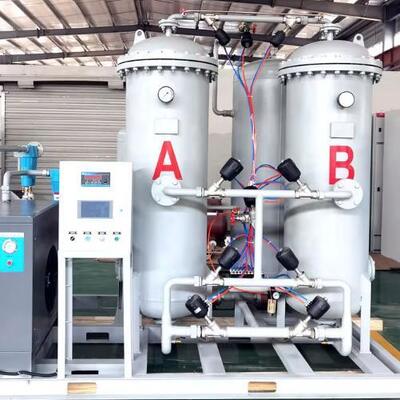
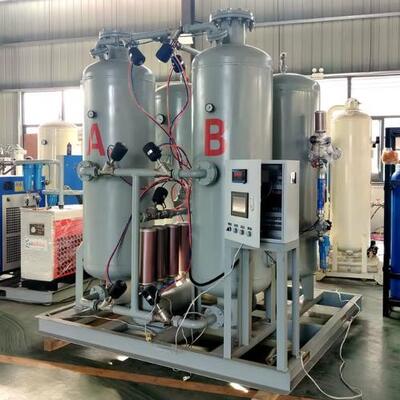
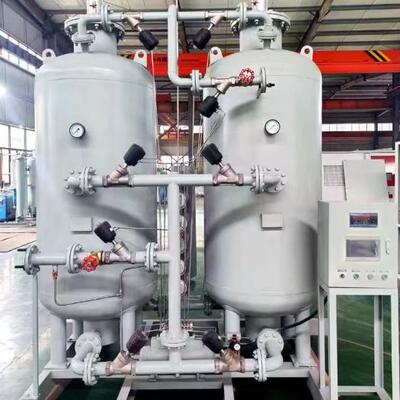
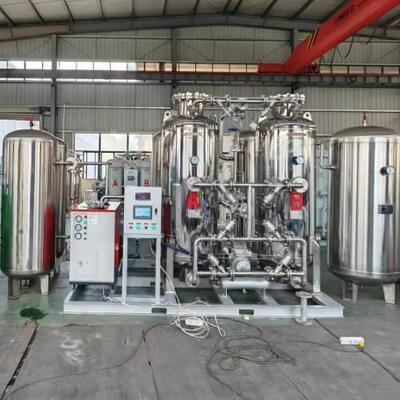
30Nm³/h 35Nm³/h 93% Purity VPSA Oxygen Generator
In chemical production processes, stable and efficient oxygen supply is essential for ensuring reaction efficiency and product quality. The VPSA Oxygen Generator (Vacuum Pressure Swing Adsorption Oxygen Generator) is specifically designed to meet these industrial requirements. Utilizing vacuum pressure swing adsorption technology, it achieves air separation and produces high-purity oxygen by leveraging the selective adsorption properties of molecular sieves for nitrogen and oxygen under varying pressure conditions.
Compared to traditional oxygen generation methods, this industrial oxygen generator offers significant advantages including low energy consumption, rapid start-up, stable purity output, and compact footprint. It is particularly suitable for continuous or intermittent oxygen supply requirements in chemical production, allowing flexible adjustment of oxygen output according to process parameters while eliminating the need for transporting and storing bottled or liquid oxygen.
Technical Specifications
| Parameter Category |
Specific Indicators |
| Oxygen Output |
30Nm³/h |
| Oxygen Purity |
93%±2% |
| Working Pressure |
0.2-0.5MPa (adjustable) |
| Feed Air Pressure |
0.08-0.12MPa |
| Unit Energy Consumption |
≤0.45kWh/Nm³ O₂ |
| Adsorbent Type |
High-quality 13X Molecular Sieve |
| Operating Temperature |
5-45℃ |
| Equipment Material |
Anti-corrosion carbon steel (main body) + 304 stainless steel (oxygen-contacting components) |
| Control Method |
PLC Fully Automatic Control |
| Alarm Function |
Alarms for abnormal oxygen purity, low pressure, and high temperature |
Why VPSA Oxygen Generators Are Ideal for Chemical Production
Chemical production environments present complex working conditions with demanding requirements for stable oxygen supply and equipment corrosion resistance. The VPSA Oxygen Generator is specifically engineered to address these challenges through its advanced VPSA Oxygen System (Vacuum Pressure Swing Adsorption Oxygen Supply System).
The vacuum regeneration process significantly reduces adsorbent regeneration energy consumption. Compared to traditional PSA oxygen generators, VPSA technology reduces energy consumption by approximately 30%, making it ideal for 24/7 continuous operation in high-energy-consumption chemical production scenarios.
The 93% oxygen purity precisely matches requirements for most chemical oxidation reactions and combustion-supporting processes, eliminating the need for additional purification or dilution while reducing resource waste. The equipment's anti-corrosion construction resists erosion from acid-base vapors and dust common in chemical workshops, ensuring long-term stable operation and preventing production interruptions.
VPSA vs PSA Oxygen Generators: Selection Guide for Chemical Applications
Both PSA (Pressure Swing Adsorption Oxygen Plant) and VPSA oxygen generators utilize pressure swing adsorption technology, but their regeneration methods determine their optimal applications. PSA oxygen generators use atmospheric pressure regeneration and are suitable for small-to-medium output scenarios (5-20Nm³/h) with lower energy consumption sensitivity.
VPSA oxygen generators employ vacuum regeneration, maintaining low energy consumption at higher outputs (30-1000Nm³/h) - perfectly aligning with chemical production's "high output + low operating cost" requirements. VPSA technology also offers higher adsorbent utilization rates and requires less space for equivalent output, making it suitable for chemical plants with limited workshop space.
Conclusion
The 30Nm³/h 93% purity VPSA Oxygen Generator represents an ideal alternative to traditional oxygen supply methods, offering low energy consumption, high stability, and strong adaptability. Through its advanced VPSA Oxygen System, precise parameter design, and anti-corrosion safety configurations, it meets the stringent requirements of chemical production.
When selecting oxygen generation equipment, chemical enterprises should comprehensively evaluate output requirements, purity specifications, operational costs, and manufacturer support capabilities to ensure optimal compatibility with production processes and achieve the goals of cost reduction, efficiency improvement, safety, and stability.